
SuperAdobe Housing Pilot
Project Story
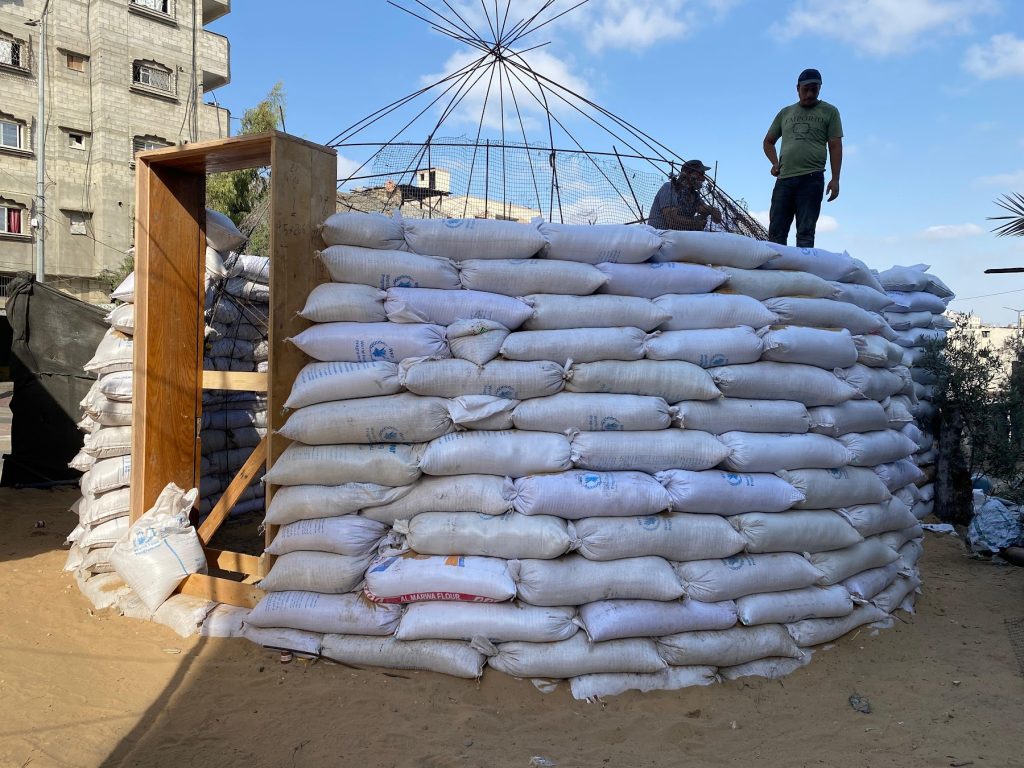
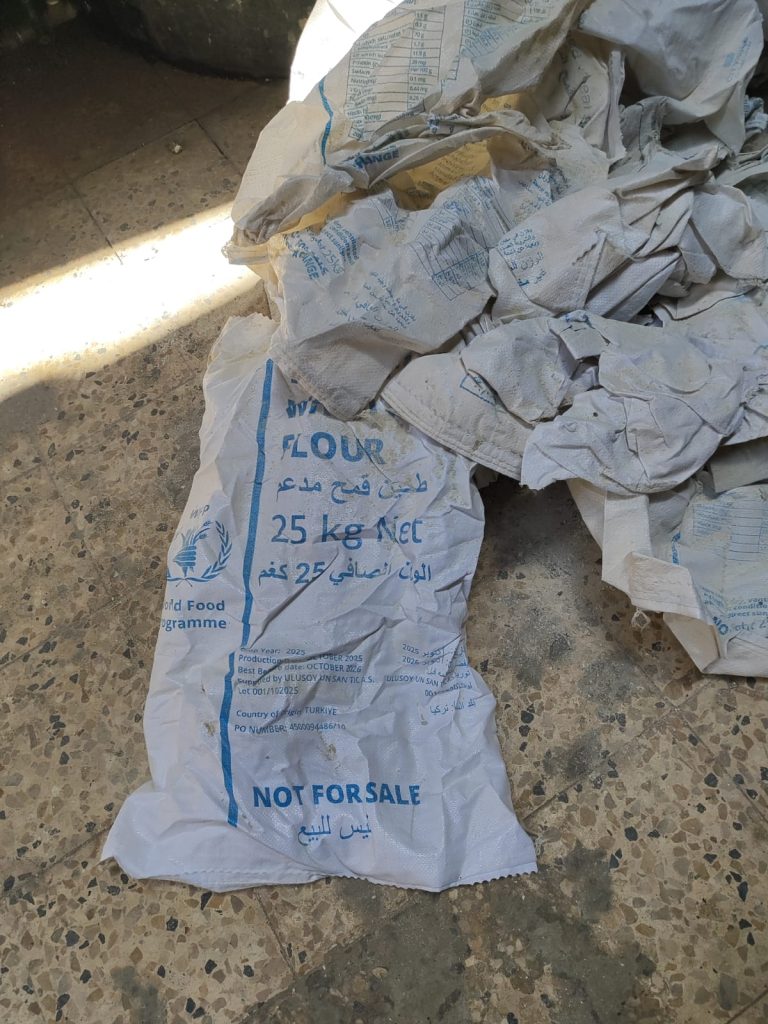
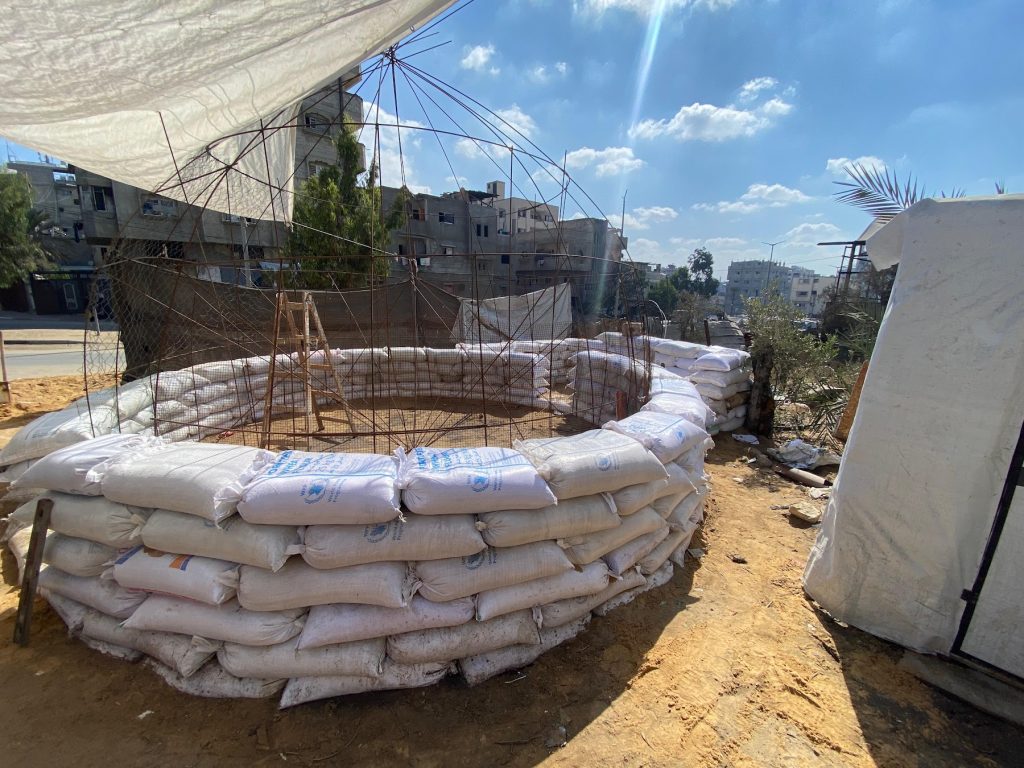
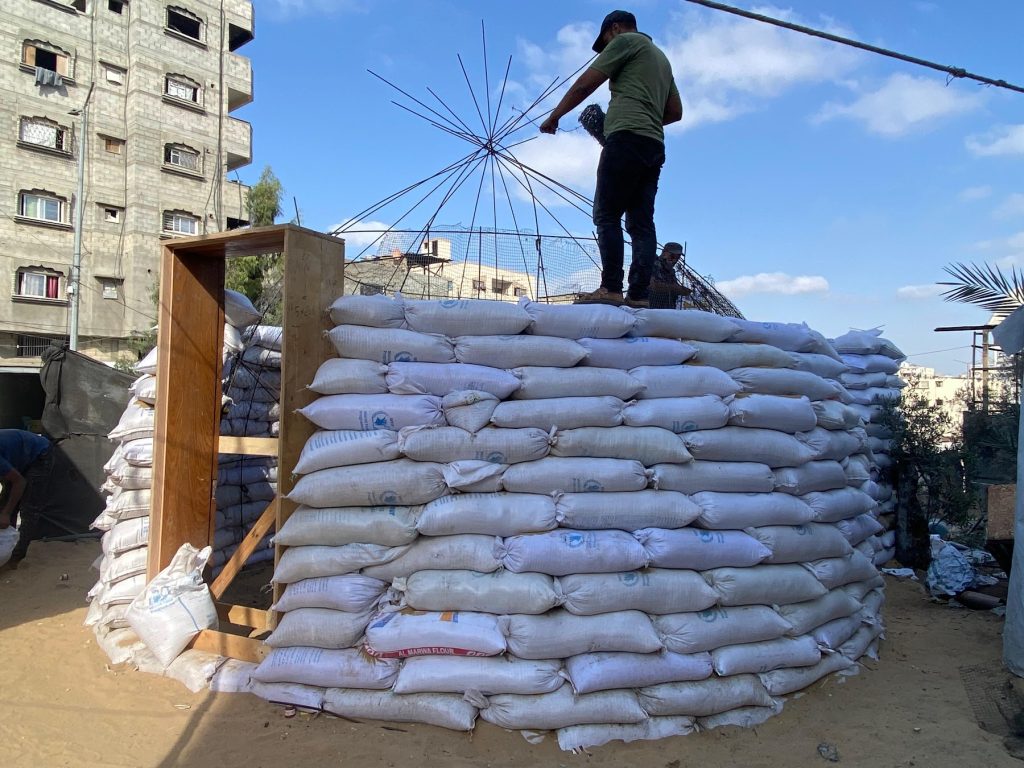
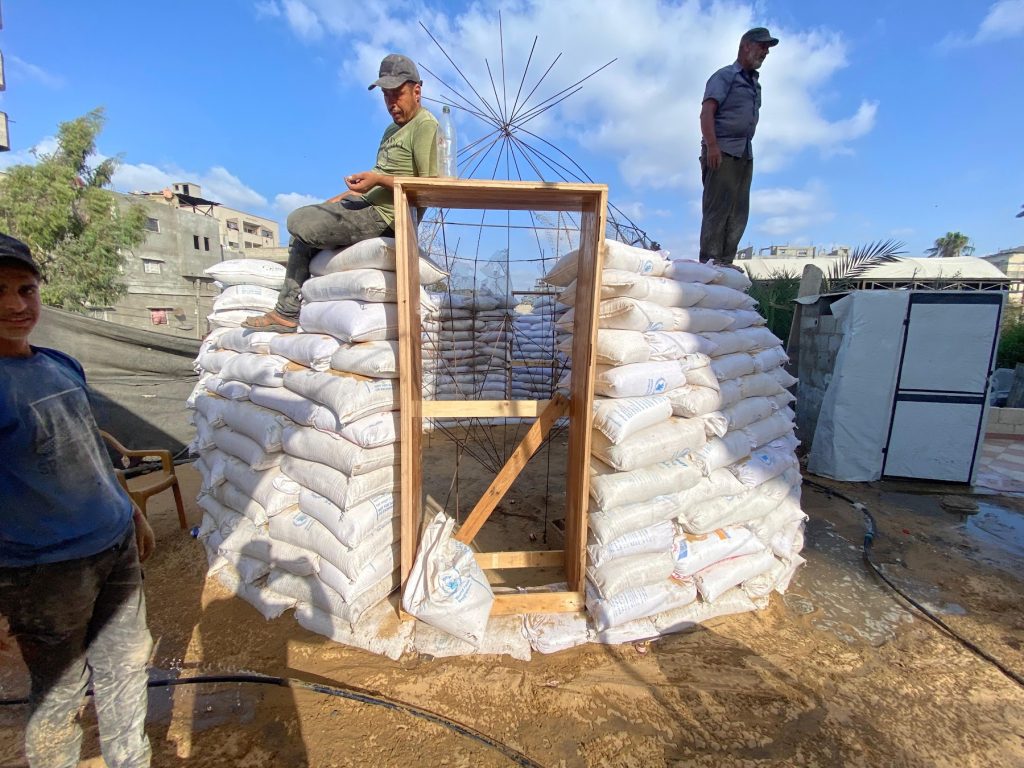
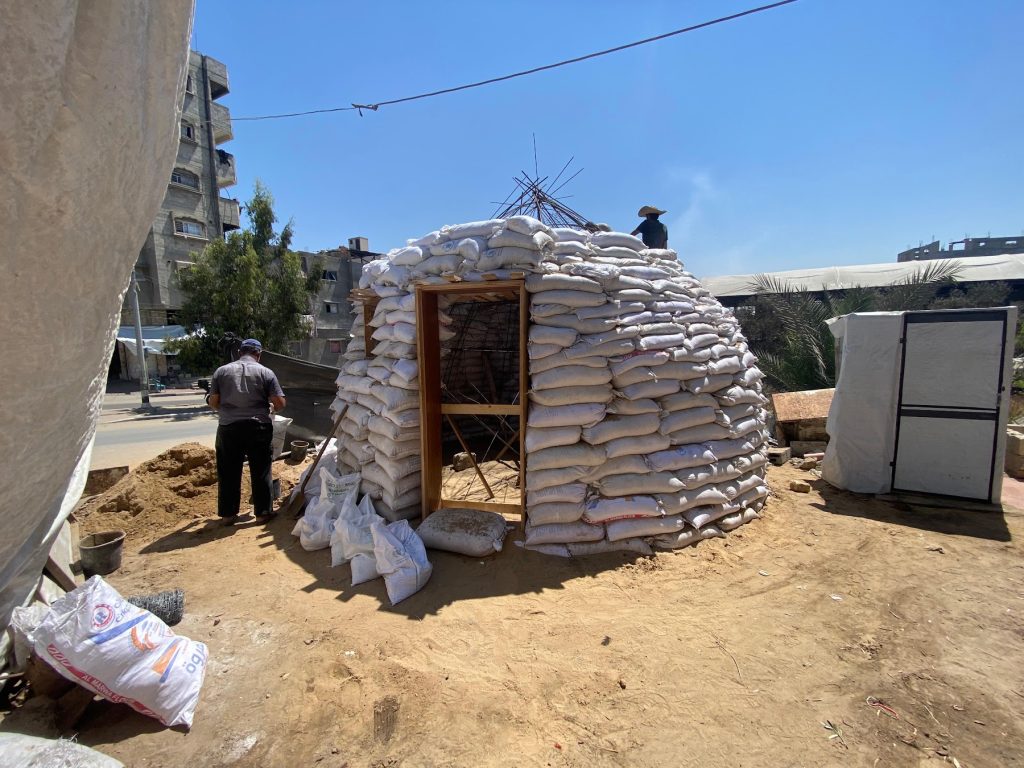
Across Gaza, displaced families are entering a third year in tents designed to last only weeks. Together with Nushoor Institute, Veranda is piloting SuperAdobe earthbag domes: durable earthbag homes built from what Gaza now has in abundance — sand, clay, crushed rubble and the polypropylene flour sacks left over from food aid.
Why SuperAdobe
- Built from local waste: the two biggest waste streams in Gaza, rubble and woven aid sacks, are the two main materials of a SuperAdobe wall, so the method does not depend on imports.
- Designed to resist fire: once plastered, the bags are sealed beneath an earthen render, so the finished walls have no exposed fabric or plastic surface. How the walls perform with Gaza’s local plaster mixes is one of the things this pilot is testing.
- Comfortable in heat and cold: thick earthen walls store heat and release it slowly, which typically keeps interiors cooler on summer days and warmer at night.
- A tested method: SuperAdobe was developed by architect Nader Khalili and CalEarth, and domes built with the method elsewhere have withstood major earthquakes in Nepal and Mexico. Our pilot is adapting it to Gaza’s local materials.
- Built by families, not for them: domes are modular and can grow into clusters around shared courtyards, with space for water, sanitation and solar power.
The pilot
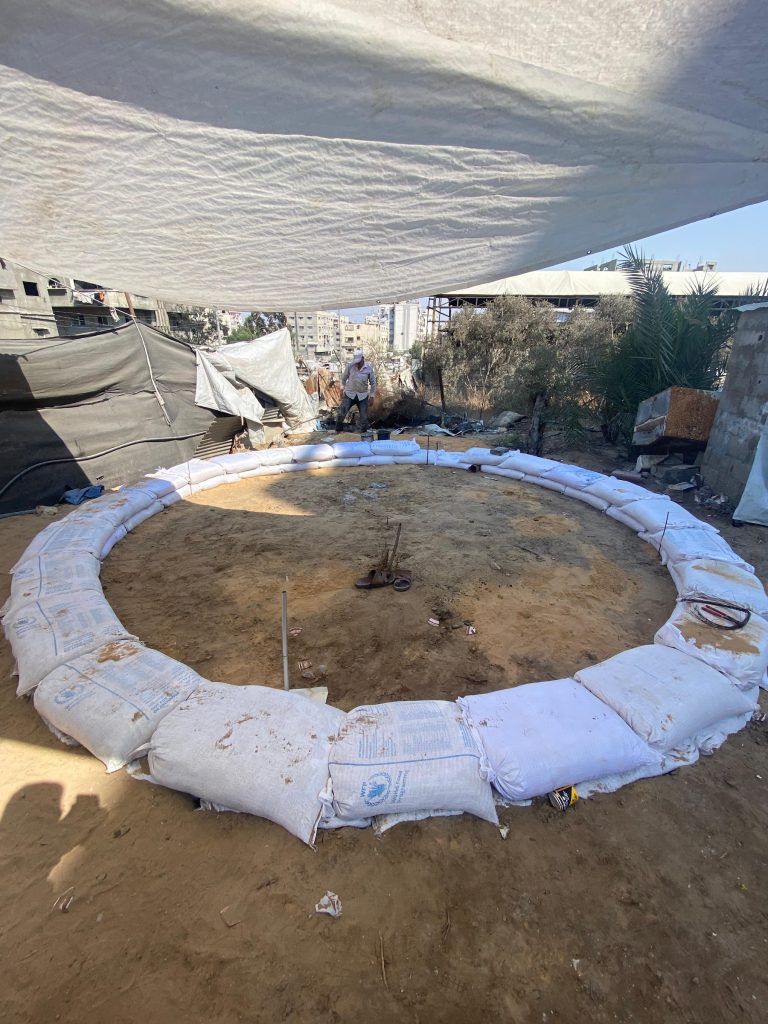
Nushoor Institute leads the technical methodology and documentation, while Veranda coordinates construction, community engagement and logistics in Gaza. A full-scale reference dome built in Atlanta captured the construction knowledge and produced step-by-step guidance for non-specialist builders.
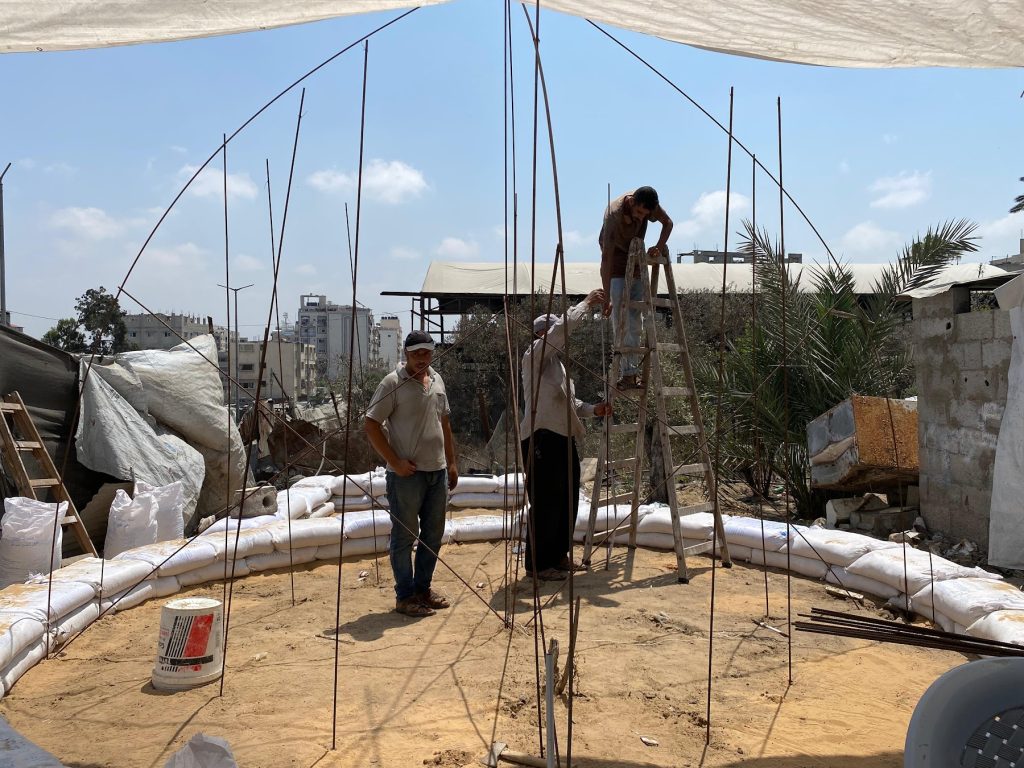
In Gaza, the field team has sourced sand, clay-bearing soil, rubble, recovered sacks, barbed wire and salvaged rebar, and filled hundreds of bags on site. Construction of the first dome, designed for a pilot family, began in August 2026 and is now in progress.
Next steps
- Complete the first dome and move the pilot family in.
- Refine soil and plaster mixes for Gaza’s local materials.
- Gather structured feedback from the pilot family.
- Scale towards clusters of homes once the design is validated.