

Water scarcity and soil degradation have made soilless growing one of the most practical ways to produce food in small or difficult spaces. Hydroponics and aeroponics are the two best-known methods. This guide compares how they work, what they need, and where each makes sense.
What is hydroponics?
Hydroponics grows plants in water instead of soil. The roots sit in, or are regularly fed by, a nutrient-rich solution that provides everything the plant needs.
Advantages of hydroponics:
- Water efficiency: recirculating systems use much less water than soil farming.
- Faster growth: nutrients reach the roots directly.
- Year-round production: indoors or under cover, growing continues whatever the season.
- Fewer soil problems: no soil-borne pests or diseases.
Hydroponics suits places with poor soil or limited water, and it is relatively simple to start at small scale.
What is aeroponics?
Aeroponics is a related technique. The roots hang in the air inside a closed chamber and are misted with nutrient solution at regular intervals.
Advantages of aeroponics:
- Even lower water use: roots are misted rather than submerged.
- More oxygen at the roots, which can support strong growth.
- Vertical potential: systems are often built as towers to save space.
- Precise control of humidity, temperature and feeding.
Aeroponic systems are more complex and costly. They depend on pumps and misting nozzles working without interruption, so they suit sites with reliable power and regular monitoring.
Key differences
| Aspect | Hydroponics | Aeroponics |
| How roots are fed | Submerged in or flushed with nutrient solution | Misted with nutrient solution in the air |
| Water use | Much less than soil farming | Usually even less than hydroponics |
| Complexity | Moderate; many simple designs exist | High; needs precise timing and clean nozzles |
| Cost | Low to moderate | Higher |
| If the power fails | Roots in water systems stay moist for a while | Roots can dry out quickly |
| Space | Horizontal or vertical | Often vertical towers |
The choice depends on the project’s goals, budget and space, and above all on how reliable the power supply is.
Which one fits low-resource settings?
Where power is unreliable and spare parts are hard to find, as in Gaza, simpler hydroponic systems are usually the safer choice. Aeroponics is more efficient but leaves little margin for failure.
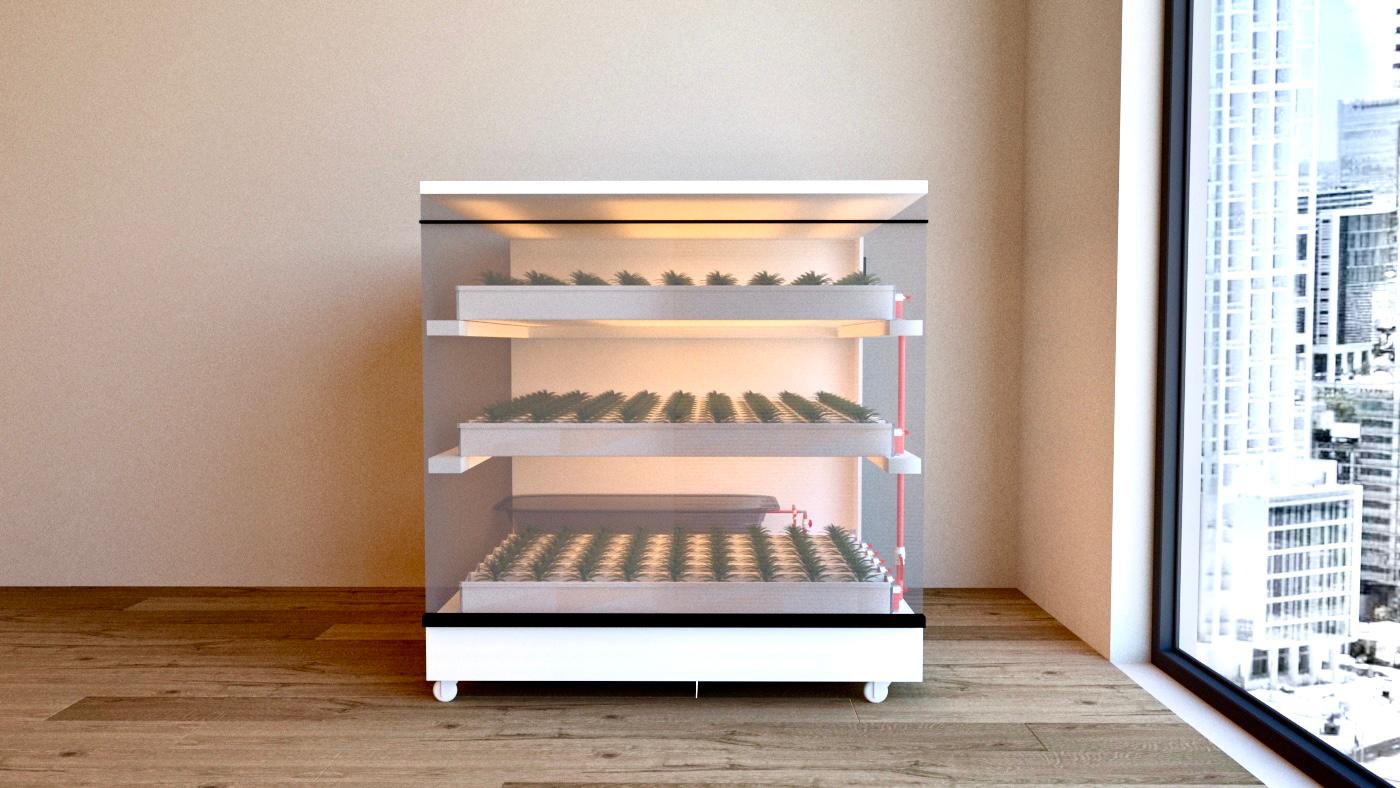
Veranda’s own soilless growing so far has been hydroponic: HydroVera, a compact device designed so families in small apartments in Gaza could grow food indoors. Aeroponics is a technique we follow but have not yet used in a project.
Conclusion
Both methods grow a lot of food with little water and space. Hydroponics is the practical starting point for most homes, schools and small farms; aeroponics makes sense where precise control and reliable power are available.