

Every year, huge numbers of tyres, pallets, planks and plastic containers are thrown away. In circular design, many of them become planters, seats, fences and play equipment. Designing with recycled materials saves money and waste, and gives a space a character that new materials rarely have. This guide covers which materials work well, how to use them safely, and practical design ideas for gardens and play spaces.
What is circular design?
Circular design keeps materials in use for as long as possible instead of throwing them away after one use. In landscape and garden design, it means looking at what is already available locally, such as waste, offcuts and salvage, before buying anything new.
It matters most where new materials are expensive, scarce or hard to import. There, reuse is often the difference between a project happening or not.
Benefits of designing with recycled materials
- Lower cost: many materials are free or cheap.
- Less waste: materials stay out of landfills and open dumps.
- Lower embodied carbon: reusing a material avoids the energy needed to make a new one.
- Community involvement: collecting, cleaning and painting materials is work that neighbours, students and families can share.
- Character: reused materials carry a story, which people notice and value.
Common recycled materials and how to use them
Tyres
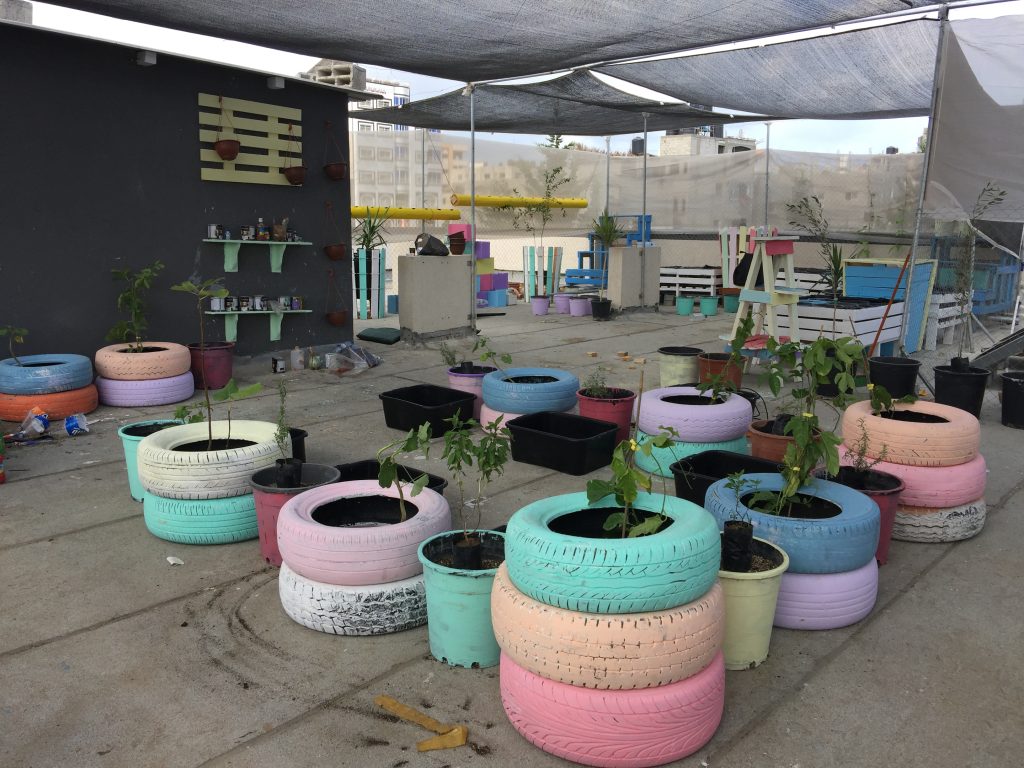
Tyres are strong, weatherproof and easy to stack. They make planters, seats, steps, edging, and tunnels and climbing elements in playgrounds. Paint them in bright, non-toxic colours and drill drainage holes before planting.
A note on food: as they age, tyres can release small amounts of zinc and other compounds. Many growers line tyre planters, or use them for flowers, herbs and shrubs rather than root vegetables. Avoid tyres with exposed steel wires.
Wooden pallets
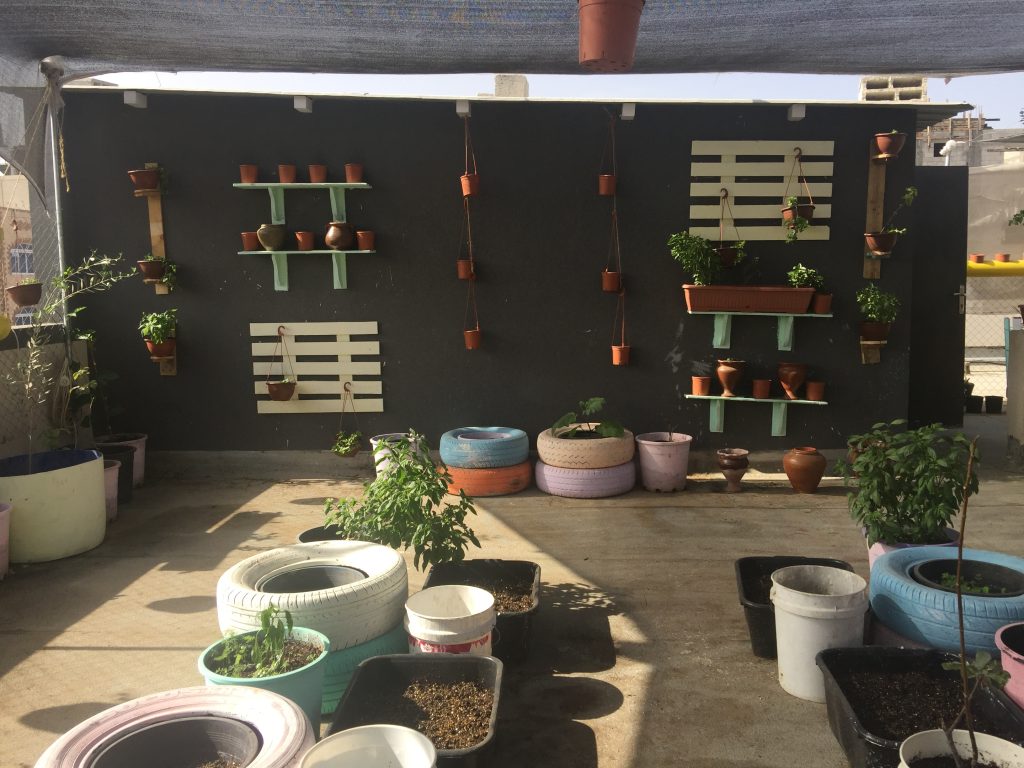
Pallets become vertical gardens, raised beds, benches, compost bins and fences. Check the stamp before using one: HT means heat-treated and is suitable for gardens, while MB means it was fumigated with methyl bromide and should be avoided. Remove nails, sand the surfaces and seal outdoor pieces with a natural oil.
Reused timber and cable reels
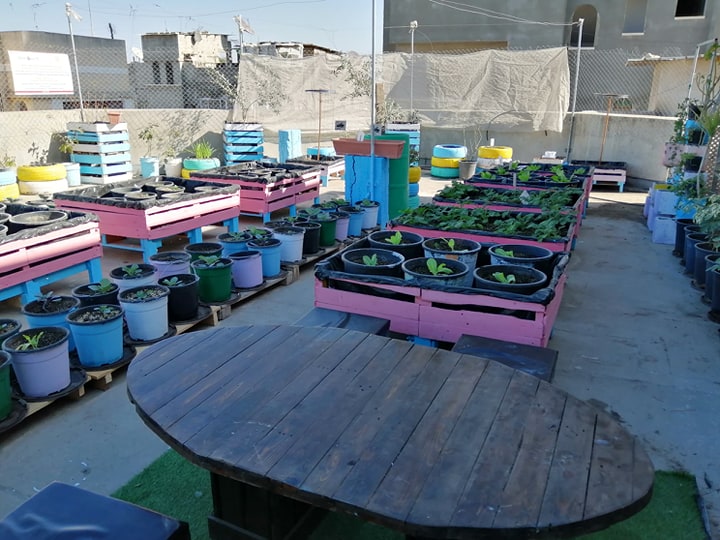
Old beams and planks work for pergolas, decks, benches and raised beds. Check for rot and insect damage, and avoid old timber treated with chemical preservatives in food beds. Large wooden cable reels make sturdy outdoor tables with almost no work.
Plastic containers and bottles
Buckets, crates and bottles become seedling pots, self-watering planters and simple drip reservoirs. For growing food, food-grade plastics such as PET (1), HDPE (2) and PP (5) are generally considered safer choices. Plastic breaks down in strong sun, so shade it or paint it where possible.
Bricks, blocks and rubble
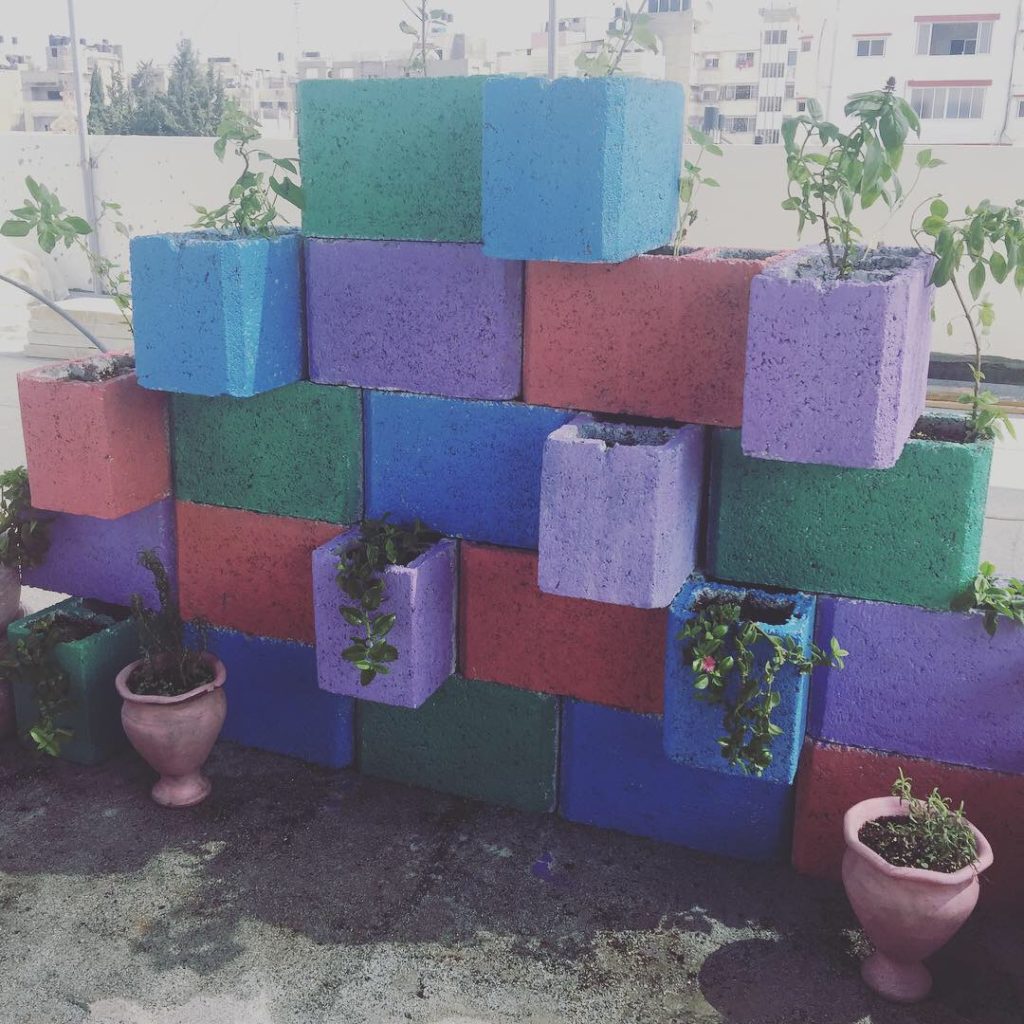
Salvaged bricks and concrete blocks build raised beds, low walls, paths and steps. Hollow blocks can be stacked into a planter wall, with herbs or succulents in each cavity. Crushed rubble can form the base layer of paths or be packed into wire gabions for walls and seats.
Metal
Old pipes, rebar and frames make trellises, arches, shade structures and frames for climbing plants. Remove rust and sharp edges, and paint exposed metal to protect it and to keep it cooler to the touch.
Designing for safety
- Know where a material came from, and avoid anything that held fuel, pesticides or chemicals.
- Remove nails, screws, wires and splinters, and round off edges.
- Check that reused pieces are strong enough for the load, especially seating and play equipment.
- Use non-toxic, outdoor-rated paints.
- Apply stricter checks for children’s play spaces; see our guide to inclusive playground design.
Design ideas to try
- A tower of stacked tyre planters for herbs and flowers.
- A pallet vertical garden for herbs on a balcony wall.
- A cable-reel table with tyre or block seating around it.
- A painted block wall planted with succulents.
- A bottle drip system for watering pots slowly.
- A three-bay pallet compost bin.
Make it look designed, not improvised
Recycled materials look their best when they are used with intention. Choose a limited colour palette and repeat it, use the same material in several places to create rhythm, and keep joints and finishes neat. A few well-made pieces will always look better than many rushed ones.
Conclusion
Designing with recycled materials is practical, affordable and creative. With a little care over safety and finish, tyres, pallets, blocks and timber can become gardens and spaces that last for years. For more ideas, read our guide to urban green spaces, or ask our Design Studio to help design a space with the materials you already have.